The Psychology of Direct Mail Marketing: Why Real Estate Still Needs Something You Can Hold
The real estate world has evolved fast.
We’ve gone from print ads to Google Ads, from door knocking to Instagram Stories, and now to AI-powered everything.
The tools changed — but the people didn’t.
And yet, one of the most traditional marketing channels hasn’t just survived — it’s resurged.
Not because it’s nostalgic.
Not because it’s “old school.”
But because it taps into human psychology in a way digital simply can’t.
That channel is direct mail marketing.
When we talk about the psychology of direct mail marketing, we’re really talking about how people make decisions, form trust, remember brands, and choose who to work with. Real estate transactions are emotional, personal, and deeply tied to identity. That’s why the medium matters.
Let’s explore why direct mail connects on a sensory and emotional level — and how REALTORS can use it to build real relationships, not just impressions.


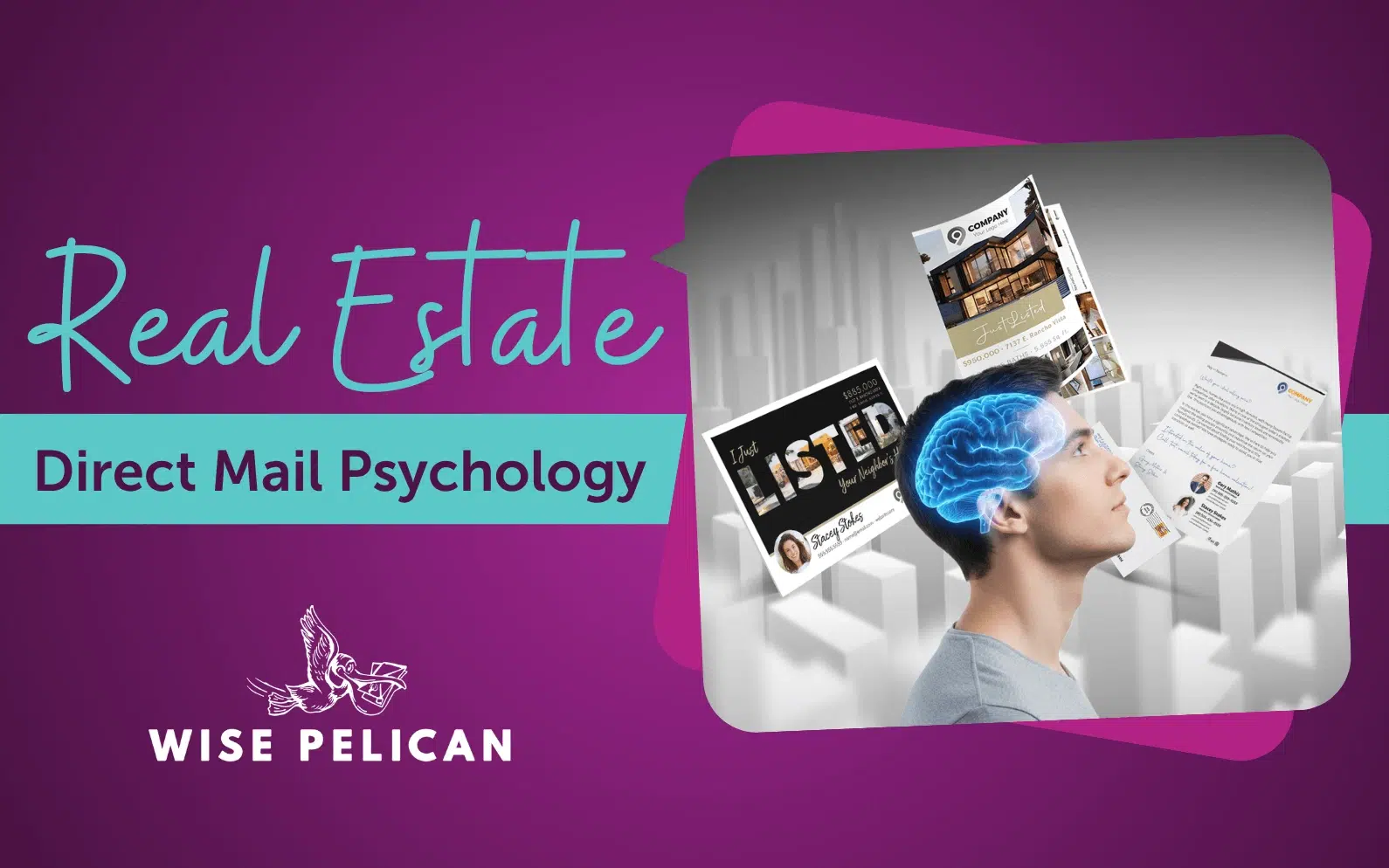
Why Direct Mail Still Works (Even in a Digital-First World)
We live in a world of endless scrolling. Thousands of ads, notifications, and messages compete for attention every single day.
Eventually, our brains hit what psychologists call banner blindness — the automatic habit of ignoring anything that looks like an ad.
But direct mail interrupts that pattern.
It requires touch.
It exists in real physical space.
It feels personal.
The Tangible Advantage
Holding something triggers haptic memory, a neurological response that increases:
- Emotional engagement
- Information retention
- Perceived value
Researchers have shown that the brain processes printed material with more focus and deeper recall than digital screens. The message doesn’t just get seen — it gets stored.
This is where personalized direct mail marketing becomes powerful.
When someone sees their name, their street, their neighborhood, the message becomes relevant — and relevance builds trust.
Why Does Direct Mail Work So Well in Real Estate?
Buying or selling a home is not like buying sneakers or scheduling a haircut.
It’s a high-stakes, emotional decision — the kind where kitchen tables, late-night conversations, and family hopes all come into play. Buying a home is not purely logical — it’s about belonging, identity, and the hope of a new chapter.
People need reassurance. They need stability. They need to feel like their agent understands the significance of the moment.
Direct mail offers:
- A physical reminder you exist
- Credibility (investing in print signals seriousness)
- Consistency over the long real estate cycle
And unlike a disappearing Instagram Reel, a postcard can sit on a counter for 17+ days — quietly building recognition every time someone passes it.
Direct mail also boasts higher engagement rates than email, real estate social media marketing, or ads. Statistics show open rates of 80% plus, compared to 20-30% for emails. In fact, 84% of real estate agents believe their highest marketing return on investment (ROI) comes from direct mail.
What Psychological Triggers Make Direct Mail Convert?
Direct mail works because it doesn’t just deliver information — it creates an experience. That experience activates core decision-making centers in the brain that help people remember you, trust you, and eventually choose you.
Here’s how the psychology breaks down:
1. Haptic Perception (Touch Creates Meaning)
When someone holds a postcard or opens a letter, the sense of touch activates the brain’s sensorimotor memory center. This is called haptic perception.
Digital messages are processed quickly and forgotten quickly — scroll, swipe, gone.
But physical mail slows the brain down. It requires holding, turning, noticing texture, paper weight, and color.
Those small physical interactions signal to the brain:
This is real. This deserves attention.
This is why something as simple as a heavier card stock, textured finish, or handwritten note can significantly increase emotional engagement and memorability.
2. Tangibility & Recall (It Stays Visible, So It Stays in Mind)
A digital ad disappears the second someone scrolls.
But a letter or postcard lives in the environment — on the kitchen counter, the mailbox table, pinned on the fridge.
The brain forms location-based memory, meaning we remember objects that occupy physical space around us.
That means your message isn’t just received — it’s re-seen, sometimes dozens of times over days or weeks.
This repeated, passive exposure strengthens both brand familiarity and recall — two foundation blocks for real estate lead conversion.
3. Trust (Effort Signals Credibility)
Humans intuitively judge how much effort something requires.
Anyone can auto-send an email. Anyone can run a Google ad.
But designing, printing, personalizing, and mailing something shows commitment.
In psychology, this is known as the effort heuristic:
We assign more value to something that took more work to create.
In real estate — where buying and selling is deeply emotional and high-stakes — trust is everything.
Direct mail signals:
- This agent is real.
- This agent invests in their clients.
- This agent cares enough to show up.
And that alone can move someone closer to contacting you — sometimes before they even fully know why.
How Personalized Direct Mail Builds Deeper Relationships
The key to personalized direct mail is relevance.
Generic doesn’t move anyone.
When your message speaks directly to the homeowner’s environment, concerns, or aspirations, you tap into powerful motivators like:
- Social Proof: “Homes like yours are selling.”
- Scarcity: “Inventory in your neighborhood is limited.”
- Reciprocity: “Here’s valuable local insight you can use.”
Direct mail works best when it feels like service, not advertising.
How Does Digital Retargeting vs. Direct Mail Psychology Differ?
Digital marketing moves fast. It’s everywhere, all the time — quick impressions, quick scrolls, quick decisions. It builds familiarity, but the message often fades as quickly as it appears.
Direct mail slows the moment down.
It invites someone to pause, hold something, and look at it. It feels personal — and that feeling creates trust.
Both have value. One keeps you visible. The other makes you memorable.
Here’s how they differ side-by-side:
| Aspect | Digital Retargeting | Direct Mail |
|---|---|---|
| Attention | Quick, fleeting | Focused, lasting |
| Emotion | Familiarity, convenience | Trust, connection |
| Memory | Short-term recall | Deep, long-term recall |
| Perceived Effort | Automated | Personal and intentional |
| Response Driver | Urgency and ease | Trust and credibility |
| Best For | Low-cost conversions, re-engagement | High-value offers, brand building |
Should They Work Together?
Absolutely.
A homeowner receives your postcard → Googles your name → Finds your social proof → Signs up for your valuation form.
This is how modern personalized real estate marketing works.
Not digital or direct mail.
Digital with direct mail.
How REALTORS Can Apply the Psychology Today
There are two standout formats:
1. Letters (For Trust + Depth)
Letters say: “This matters enough to open.”
They create intimacy, elevate your expertise, and feel personal.
2. Postcards (For Familiarity + Recognition)
Postcards say: “Here I Am” or “Remember me.”
They are visual, fast to understand, and display instantly.
Explore Real Estate Postcards


Whether you use letters or direct mail postcards, the tactile details matter. Paper texture, fonts, and layout all signal credibility. Many of the most effective direct mail marketing campaigns combine both: postcards for awareness, letters for a deeper connection. Plan them together and keep personalization at the center.
Final Thoughts
Real estate is, at its core, about trust. It’s about identity, timing, hope, and the quiet weight of a life decision. It’s never just numbers or negotiations. It’s personal.
Direct mail honors that.
It doesn’t rush. It doesn’t compete for attention in a crowded feed. It arrives gently, sits on the kitchen counter or the entry table, and waits to be picked up. It gives someone something real to touch, hold, and consider. It creates presence without pressure.
In a world getting faster and louder, that kind of moment is rare. And it is remembered.
Direct mail isn’t fading — it’s becoming more valuable. The agents who understand the psychology behind it aren’t just marketing. They’re building relationships that last.
And in real estate, that has always been the difference.
Become the REALTOR Everyone Knows and Trusts
Create and ship professional real estate marketing materials within minutes.

Kirk Weingartens
ROVI Homes
“It's absolutely something you're gonna want to do if your in the real estate business.”
| 10x ROI | 6 Listings | $100k GCI |


Ledeen Hangen
Realty One Group, Lowcountry
“I would not be where I am today had it not been for Wise Pelican and their guidance.”
| 6.6x ROI | 14 Listings | $150k GCI |


Eric Kirkwell
Heart and Home Orlando
“It's very easy for us on our marketing budget to say this how much we're spending and this is the return we're getting, and the ROI has been 10-to-1.”
| 10x ROI | 12 Listings |
Our Latest Blogs
Data-Driven Direct Mail for Real Estate: Farm Smarter With Data
Real Estate Direct Mail Campaigns: Insights, Strategy, and Results